What Are the 2026 Top Artistic Rendering Trends?
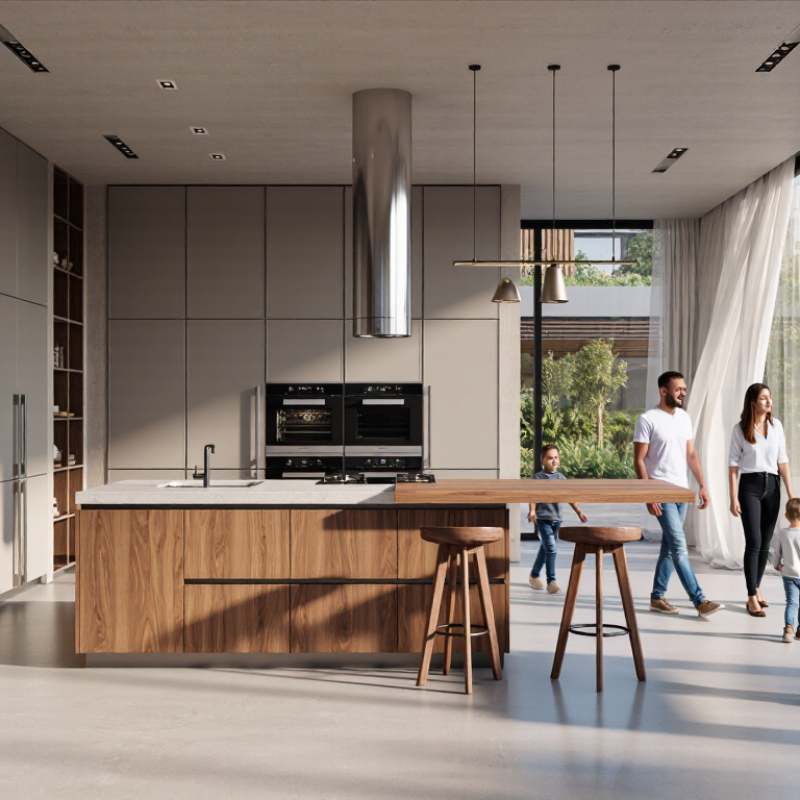
In 2026, Artistic Rendering is moving beyond visual polish toward clearer, more purposeful communication. Designers now combine real-time engines, generative tools, and physically informed lighting. The strongest images do more than impress. They explain space, material behavior, atmosphere, and human scale. A sunlit kitchen may reveal brushed metal, soft timber grain, and changing shadows across the floor. These details help clients judge a design before construction begins. They also expose weaknesses early. Good rendering remains an informed process, not a button. Experienced artists still check camera balance, texture accuracy, color consistency, and accessibility. They compare digital results with material samples, site photographs, and technical drawings. That discipline protects trust.
This overview examines the leading trends shaping architectural, product, interior, and entertainment visualization in 2026. Expect sharper interest in cinematic realism, stylized minimalism, immersive virtual walkthroughs, and responsive scenes that change with daylight. Sustainable storytelling is also gaining importance. Renderings may show energy-conscious materials, adaptive facades, and realistic weather conditions without overstating performance. Artificial intelligence will accelerate iteration, but professional judgment remains essential. A generated image can suggest a compelling façade while misrepresenting structure or scale. That is where review matters. Not every forecast will age well. Some experiments will fail. Yet failure can reveal what viewers actually need: credible context, readable information, and emotional clarity. The most useful Artistic Rendering trends will unite technical control with human observation. They will make complex ideas easier to see, question, and improve.
Definition and Scope of Artistic Rendering in 2026
In 2026, artistic rendering means creating visual experiences through digital composition, simulation, and human direction. It covers still images, animation, virtual environments, product visualization, and interactive spatial scenes. The scope now includes procedural workflows and AI-assisted generation, but artistic intent remains essential. A generated image is not automatically an artistic rendering. Human choices shape its mood, materials, lighting, and cultural meaning. In production reviews, strong work often reveals its decisions: a rough wireframe, controlled light falloff, or an imperfect surface that feels lived in. Those details matter. The boundary remains blurry.
The economic context is substantial. UNCTAD’s Creative Economy Outlook 2024 reported 1.4 trillion dollars in global creative-services exports in 2022. Creative-goods exports reached 713 billion dollars. These figures do not measure rendering alone. They show the wider market supporting visual production. The World Economic Forum’s Future of Jobs Report 2025 found that 86 percent of employers expect artificial intelligence and information-processing technologies to transform business by 2030. This supports a broader definition of rendering, including hybrid workflows, real-time visualization, and spatial content. Yet speed can weaken judgment. Some images look technically flawless but emotionally empty. In 2026, the leading trend may be controlled imperfection: physically credible light, clear authorship, accessible design, and revisions that improve meaning rather than merely adding detail.
AI-Assisted Workflows and Generative Visual Development
What Are the 2026 Top Artistic Rendering Trends?
In 2026, artistic rendering is moving beyond polished images. AI-assisted workflows help artists test light, material, and composition before detailed modeling begins. A designer can describe a quiet gallery at dusk, then generate ten spatial studies within minutes. Each study reveals different reflections, window haze, and visitor scale. The machine accelerates exploration, but it does not understand cultural context or project intent. Human judgment remains essential.
Professional teams are building traceable pipelines. They record prompts, reference images, edits, and approval decisions. This evidence makes revisions easier to explain to clients and collaborators. It also protects visual consistency across scenes. Generative tools can produce convincing marble surfaces, yet subtle errors appear under close inspection. Veins may repeat unnaturally. Shadows may ignore the light source. Experienced artists check geometry, perspective, texture behavior, and accessibility details before delivery.
The strongest 2026 practice treats generation as a conversation, not an automatic answer. Artists create rough inputs, challenge the output, and refine only useful parts. Sometimes, a flawed result becomes the better direction. A distorted doorway may suggest a stronger narrative, though it can also waste hours. That tension deserves attention. Teams should question whether speed improves meaning or merely increases image volume. I still keep manual sketches beside generated studies. They expose assumptions that polished previews can hide, especially when the system confidently invents details.
What Are the 2026 Top Artistic Rendering Trends?
AI-Assisted Workflows and Generative Visual Development
Employment projections indicate continued demand across visual-production disciplines, with special effects, animation, architecture, and art direction showing positive growth. This supports a 2026 workflow model in which generative tools accelerate ideation, iteration, compositing, and final-quality refinement rather than replacing creative direction.
Source: U.S. Bureau of Labor Statistics, Occupational Outlook Handbook, 2022–2032 employment projections.
Sustainable Materials, Digital Efficiency, and Ethical Design
In 2026, artistic rendering is moving beyond visual polish. Designers are examining what each material communicates and costs. Recycled fibers, low-impact pigments, reclaimed wood textures, and mineral-based surfaces can add believable depth. Digital teams now test these choices before producing physical samples. That reduces waste, but not automatically. A digital model may hide transport emissions or unsafe labor conditions. Measure before changing.
Efficient workflows combine lightweight 3D assets, shared libraries, and cloud review with clear version control. A small studio can compare three surface options in minutes, then reserve physical mockups for critical decisions. This saves time and material. It also improves client communication because lighting, scale, and texture remain visible during review. Still, efficiency can become a trap. Faster approvals may discourage careful questions about sourcing, accessibility, or cultural meaning. Slow down when needed.
Ethical design gives those questions a formal place. Rendering teams should record material origins, labor information, environmental claims, and image permissions. Plain documentation builds trust with clients and viewers. I have found that honest uncertainty is more credible than perfect-looking data. Some suppliers cannot provide complete figures, and recycled content may vary between batches. Show that limitation in the proposal. Good rendering should make sustainable choices understandable, not merely attractive. It should also represent people, homes, and communities without stereotypes. A texture can be beautiful and still tell an incomplete story.
Personalization, Cultural Diversity, and Future Rendering Practices
In 2026, artistic rendering will move beyond visual polish. Personalization will shape rooms, products, and digital characters around individual habits. A kitchen render may show worn handles, morning sunlight, and a preferred working height. These details make an image feel lived in. They also expose a weakness. Personalization can become predictable when designers trust data more than observation.
Cultural diversity will become a practical rendering standard, not a decorative gesture. UNESCO reports that cultural and creative industries generate 3.1% of global GDP and 6.2% of employment. That scale demands broader visual references. Designers should study regional materials, family structures, clothing, rituals, and spatial customs. A courtyard, woven surface, or lighting choice can carry history. Yet one reference image cannot represent a whole community. More listening is needed.
Future rendering practices will combine real-time tools, generative systems, and careful human review. The World Economic Forum’s Future of Jobs Report 2025 estimates that 39% of workers’ current skills may change or become outdated by 2030. Rendering teams will need stronger visual judgment, cultural research, and data literacy. They should record source images, revisions, and permissions. This builds trust. It also reveals uncomfortable errors. A technically perfect face may still look culturally careless. A fast workflow may reduce reflection. Sometimes, slower work produces the more honest image.