Why Ai 3D Rendering is Revolutionizing the Future of Design and Visualization?
The advent of AI 3D rendering technology marks a transformative era in design and visualization, redefining the boundaries of creativity and efficiency. As industry experts recognize, this innovation empowers designers to elevate their projects beyond traditional limitations. Leading figure in the field, Dr. Sarah Thompson, asserts, “AI 3D rendering allows designers to reimagine their visions with unparalleled accuracy and speed, facilitating a seamless creative process.”
In a world where visual communication is paramount, the significance of AI 3D rendering cannot be overstated. By utilizing sophisticated algorithms and machine learning, designers can generate ultra-realistic visualizations that not only enhance presentations but also streamline the design workflow. This shift towards automation and intelligence in rendering processes cultivates a new environment where imagination meets technology, creating endless possibilities for industries ranging from architecture to product design.
As we delve into the impact of AI 3D rendering, it's essential to explore how this technology is revolutionizing the future of design, providing tools that elevate both the aesthetic quality and practical utility of visual representation. The integration of AI in rendering signifies a pivotal advancement, ushering in a new standard for designers worldwide.
The Emergence of AI in 3D Rendering Technologies
The rapid emergence of artificial intelligence in 3D rendering technologies is fundamentally transforming the fields of design and visualization. According to a recent report by MarketsandMarkets, the global 3D rendering market is projected to grow from USD 1.2 billion in 2021 to USD 6.9 billion by 2026, reflecting a CAGR of 39.6%. This growth is largely attributed to advancements in AI, which are streamlining the rendering process and enabling designers to achieve unprecedented levels of detail and realism.
AI-powered tools can significantly reduce the time required for 3D rendering. Traditional rendering methods often consume hours or even days to produce high-quality images, while AI-driven solutions can accomplish similar tasks in a fraction of the time. For instance, a study by NVIDIA reveals that their AI-enhanced rendering models can achieve photorealistic quality with up to 90% time reduction. This efficiency not only accelerates design iterations but also opens up new possibilities for real-time visualization, allowing designers and clients to make informed decisions quickly.
Furthermore, the integration of machine learning algorithms allows for advanced simulations of lighting, textures, and complex scenes that were previously difficult to compute. For example, a survey conducted by Statista found that over 45% of architects and designers believe that AI-generated renderings improve client communications significantly. As these technologies continue to evolve, the future of design and visualization will likely be characterized by greater creativity and innovation, as professionals leverage AI to push the boundaries of what is possible within the 3D rendering landscape.
Transforming Design Processes through AI-Assisted Visualization
Artificial Intelligence (AI) is fundamentally transforming the design process by enhancing visualization techniques in various industries. Recent reports indicate that AI-powered 3D rendering tools can reduce design time by up to 50%, allowing professionals to iterate quickly through ideas and conceptual models. This acceleration is crucial as markets become increasingly competitive, where the speed of bringing ideas to life can influence overall success. By merging AI capabilities with traditional design workflows, designers not only enhance their productivity but also improve the quality of their visual outputs, leading to more informed decision-making.
The integration of AI-assisted visualization also enables designers to produce photorealistic renderings that were previously time-intensive and laborious. According to a study by the Design Automation Conference, the use of AI in rendering has resulted in a 70% increase in the realism of visualizations while significantly cutting down the computing power required. This is especially beneficial for sectors such as architecture and product design, where visual accuracy and detail are paramount for client presentations and stakeholder approvals.
Tip: Embrace AI tools that offer intuitive interfaces and powerful rendering capabilities. These can help streamline your design process and maximize creativity without a steep learning curve.
Tip: Regularly update your knowledge on the latest AI trends in design. Utilizing cutting-edge technologies can give you a competitive edge and keep your projects relevant in a fast-evolving landscape.
Impact of AI on Efficiency and Speed in Rendering Workflows
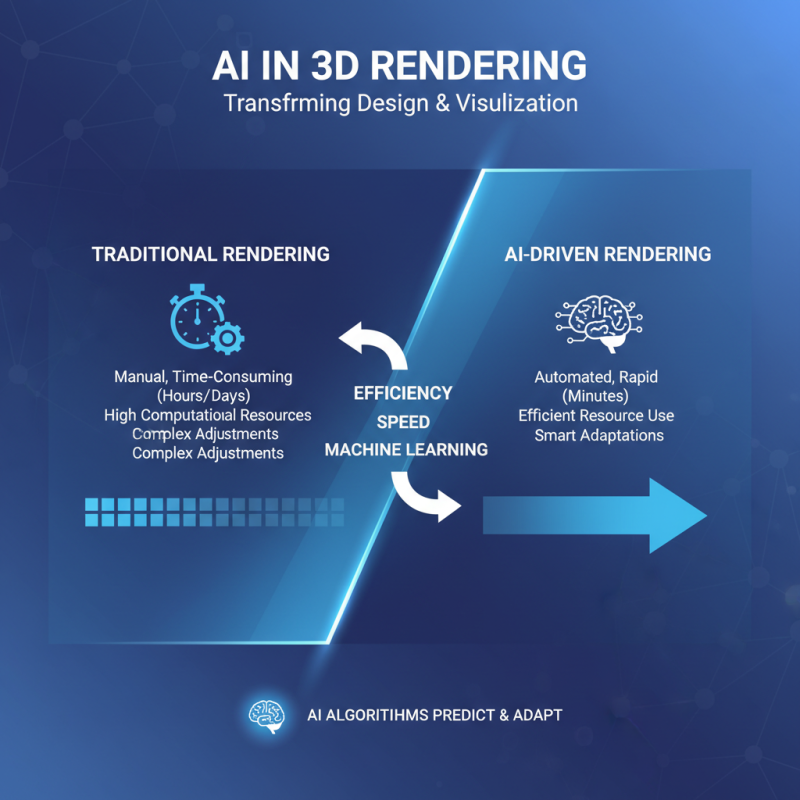
The advent of AI in 3D rendering has significantly transformed the design and visualization landscape, particularly in terms of efficiency and speed. Traditionally, rendering tasks required extensive computational resources and time, often stretching into hours or even days. However, AI-driven technologies streamline these processes by automating complex tasks such as texture generation, lighting adjustments, and scene composition. By leveraging machine learning algorithms, these systems can predict and adapt to user inputs, drastically reducing the time required to complete rendering projects.
Moreover, the integration of AI allows designers to focus on the creative aspects of their work rather than getting bogged down by technical limitations. The increased speed of rendering workflows translates to faster project iterations and quicker feedback cycles. This rapid prototyping capability not only enhances productivity but also encourages innovation, enabling designers to explore more elaborate concepts without the fear of extensive time constraints. As AI continues to evolve, its role in enhancing rendering efficiency promises to redefine the future of design, pushing the boundaries of what can be achieved in visualization.
Enhancing Creative Possibilities with AI-Powered Design Tools
AI-powered design tools are transforming the landscape of creative design and visualization. By leveraging advanced algorithms and machine learning capabilities, these tools are enabling designers to push the boundaries of creativity. According to a report by MarketsandMarkets, the global AI in the design market is projected to reach $10.3 billion by 2026, growing at a CAGR of 29.9%. This rapid growth indicates a significant shift toward integrating AI in various design processes, enhancing not only efficiency but also creative potential.
AI 3D rendering, in particular, is revolutionizing how designers conceptualize and visualize their work. Traditional rendering processes can be time-consuming, often requiring extensive manual adjustments to achieve the desired outcome. AI-enhanced tools, however, can automate complex rendering tasks, allowing designers to explore multiple design variations in a fraction of the time. A study by Autodesk found that designers utilizing AI in their workflows reported a 50% reduction in project turnaround times while simultaneously increasing creative output. This boosts overall productivity and gives designers unprecedented freedom to experiment and innovate, reshaping the future of design into an era filled with creative possibilities.
Future Trends in AI 3D Rendering and Visualization Techniques
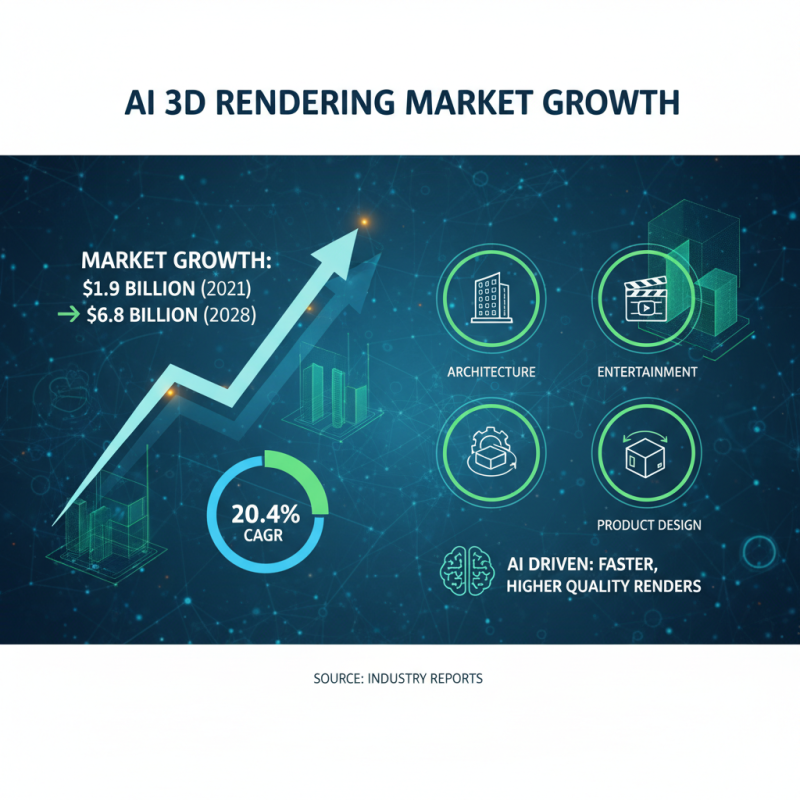
The realm of AI 3D rendering is undergoing a profound transformation, driven by advancements in machine learning and computer graphics technology. Industry reports indicate that the global 3D rendering market is anticipated to grow from USD 1.9 billion in 2021 to USD 6.8 billion by 2028, exhibiting a compound annual growth rate (CAGR) of 20.4%. This growth is largely fueled by the increasing demand for visually compelling content across various sectors such as architecture, entertainment, and product design. As AI algorithms become more sophisticated, they are enabling designers to produce higher quality renders in significantly reduced timeframes, thus facilitating a more agile design process.
Moreover, the integration of AI in 3D rendering techniques is paving the way for innovative visualization methods, such as real-time rendering and virtual reality experiences. According to a survey conducted by the International Society for Technology in Education, 78% of design professionals believe that tools enhancing visual representation will be critical in the coming years. AI-powered tools not only automate repetitive tasks but also enhance the creative capabilities of designers, allowing them to experiment with complex lighting, materials, and textures that were previously time-consuming or impossible to achieve. As these technologies evolve, they are setting a new standard for interactive design, making it imperative for businesses to adapt to these emerging trends to stay competitive in their fields.