Top 10 Tips for Effective Exterior Rendering Techniques
When it comes to home improvement, exterior rendering is a crucial aspect that transforms the appearance of your property. This technique involves applying a layer of material to the building's exterior, enhancing both its aesthetics and protection. Many homeowners seek to achieve the perfect finish but often overlook essential details that lead to unsatisfactory results.
Effective exterior rendering requires knowledge and careful execution. Common mistakes include improper surface preparation and selecting the wrong materials. Such oversights can result in cracking and a lackluster appearance. The right techniques can elevate the exterior’s charm while ensuring durability against weather elements.
In this guide, we will explore ten tips for mastering exterior rendering techniques. These insights, drawn from expert experiences, will help you avoid common pitfalls. By implementing these suggestions, you can achieve a stunning and long-lasting exterior finish. Embracing these practices not only enhances your home's value but also provides a sense of accomplishment for every homeowner.

Understanding Exterior Rendering: An Overview of Techniques
Exterior rendering is a crucial aspect of any building project. It enhances aesthetics and protects structures from weather elements. Various techniques can be used to achieve effective rendering. Each method has its advantages and challenges.
For instance, traditional cement render offers durability but might crack over time. Acrylic render has flexibility, minimizing cracks, yet its long-term performance can vary. Each choice requires careful consideration of the building's environment and design.
Some techniques, like lime render, provide breathability, allowing moisture to escape. This can be beneficial for older buildings. However, lime render demands skill and time, which can lead to inconsistencies. Testing different methods on small areas can help in understanding their properties better.
It’s essential to assess each method’s impact on both appearance and longevity.
Choosing the Right Materials for Successful Exterior Rendering
Choosing the right materials is crucial for successful exterior rendering. Various options are available, each with unique qualities. For instance, lime render is breathable and flexible, making it suitable for older buildings. However, it may not withstand harsh weather as well as other options.
Cement render offers durability and strength, ideal for modern constructions. It resists moisture but can crack over time if not installed correctly. Acrylic render provides excellent versatility and a range of finishes. Yet, it may require more maintenance than natural alternatives.
Selecting the right material depends on various factors. Consider the building’s location, weather, and architectural style. Each choice influences durability and aesthetics. Reflecting on your preferences and the specific needs of your project is essential. Balancing durability and visual appeal can be challenging. Sometimes, a hybrid approach may yield the best results.
Essential Tools and Equipment for Effective Rendering Projects
When embarking on an exterior rendering project, equipped with the right tools is imperative. Professional reports indicate that improper tools can lead to project delays and increased costs. A high-quality trowel is essential. It allows for precise application and finishing touches. Many professionals suggest using different trowel sizes for various tasks. A larger trowel spreads material efficiently, while a smaller one refines edges.
Additionally, mixing equipment plays a crucial role. A good mixer ensures consistent texture in the render. Studies show that inconsistent mixes can compromise adhesion and durability. The right mixer speeds up the process and guarantees a uniform blend. Safety gear, including masks and goggles, isn’t just a recommendation; it’s a necessity. Protecting oneself from dust and chemical exposure is vital in rendering.
Moreover, consider the importance of scaffolding for multi-story projects. It enhances safety and accessibility, ensuring that every area is reachable. However, improper setup can be hazardous, leading to accidents. Regular inspections of scaffolding equipment are crucial to reduce risks. Gathering the right tools and adhering to safety measures set the foundation for a successful rendering project.
Top 10 Tips for Effective Exterior Rendering Techniques
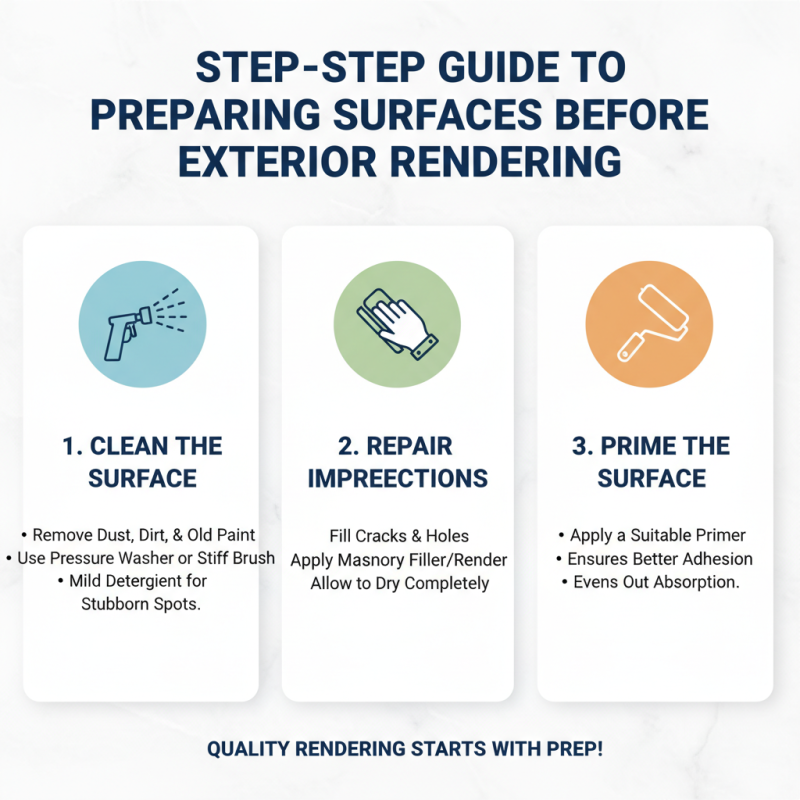
Step-by-Step Guide to Preparing Surfaces Before Rendering
Preparing surfaces for exterior rendering is a crucial step. Proper surface preparation can make or break the quality of your render. Start by cleaning the surface thoroughly. Remove dust, dirt, and old paint. This can be done with a pressure washer or a stiff brush. For stubborn spots, a mild detergent can help.
Next, check for any cracks or holes. These need to be filled before rendering. Use a suitable filler that matches the surface. Smooth out the filler to avoid bumps. Once the surface is smooth and dry, it is essential to apply a primer. This helps create a strong bond between the surface and the render. Choose a primer that is compatible with your render material.
Do not rush through these steps. Taking time now prevents issues later. Ensure everything is even and well-prepared. While mistakes can happen, learning from them is key. After preparation, you can confidently apply your exterior render, knowing you laid a solid foundation.
Finishing Touches: Techniques for a Professional Look in Rendering
In the world of exterior rendering, achieving a professional look is often the goal. Key techniques can elevate the overall appearance of any structure. One critical element is the preparation of the surface. Ensure that it is clean and free from debris. A rough surface can lead to poor adhesion, resulting in cracks later.
Color application is another vital aspect. Selecting the right hue can influence the aesthetics significantly. Consider using multiple shades for depth. However, uneven application can create an unsatisfactory appearance. It’s essential to practice consistent techniques. A roller or spray can offer different looks, but each method requires familiarity. Observe your results and adjust accordingly.
Texturing can add character to the finish. Using tools like trowels or brushes can produce distinct effects. However, uniformity may sometimes slip. If imperfections arise, do not be discouraged. They can often be integrated into the design. Reflect on your methods and seek feedback. Each project is an opportunity to refine your skills and enhance your craftsmanship.