Why Choose 3D Home Rendering for Your Next Project?
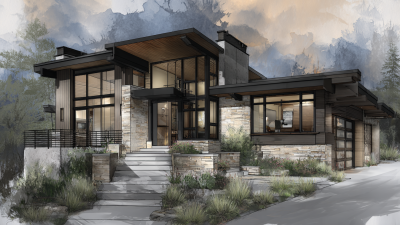
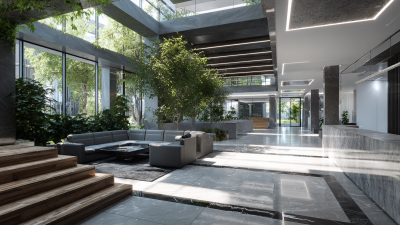
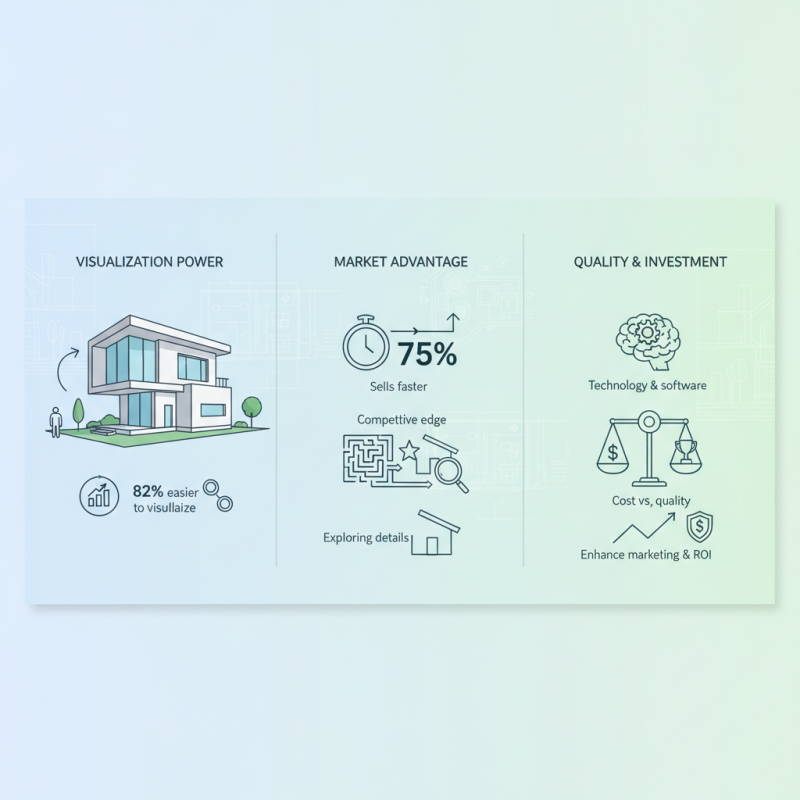
In today’s competitive real estate market, effective visualization is crucial. 3D home rendering has emerged as a leading solution. According to a report by the National Association of Realtors, 82% of buyers find it easier to visualize a home with 3D images. This technology allows clients to experience properties in a realistic way. Prospective buyers can walk through a home, exploring every detail.
Real estate professionals recognize the importance of this tool. In fact, 75% of agents report that homes with 3D visuals sell faster. However, it's essential to choose the right rendering techniques. Not all 3D home rendering services offer the same quality. Some may fall short of expectations, leading to dissatisfaction. It is imperative to review portfolios and gather feedback from previous clients.
The rise of 3D technology also poses challenges. Staying updated with the latest software can be overwhelming. Additionally, costs may vary significantly among providers. Understanding what a fair price entails is crucial. Nevertheless, investing in high-quality 3D home rendering can ultimately enhance marketing strategies. It creates a more engaging experience for potential buyers, giving you an edge in the market.
Benefits of 3D Home Rendering for Design Visualization
3D home rendering transforms design visualization. It allows homeowners and designers to see realistic images before building begins. This technology enhances communication. It bridges gaps between imagination and reality. According to recent studies, 70% of clients prefer 3D visuals over 2D sketches. They find them clearer and more engaging.
Visual realism is key. With 3D rendering, details like lighting and materials come alive. A study shows that 85% of people better understand designs with 3D perspectives. Yet, not all projects fully utilize this technology. Sometimes, designers stick to traditional methods, fearing costs. This can lead to misunderstandings about the final output.
Additionally, 3D rendering accelerates decision-making. It can cut review times in half. Clients can make choices without endless rounds of revisions. However, not all service providers deliver high-quality renderings. Some struggle with software limitations or lack experience. This inconsistency can lead to frustration and delays in projects.
Why Choose 3D Home Rendering for Your Next Project? - Benefits of 3D Home Rendering for Design Visualization
| Benefit |
Description |
| Enhanced Visualization |
3D rendering provides a realistic view of the design, helping clients visualize the space before construction begins. |
| Cost-Effective |
Identifying design flaws in the rendering phase can save money by avoiding costly changes during construction. |
| Improved Communication |
3D visuals help bridge the gap between designers and clients, ensuring everyone is on the same page regarding expectations and plans. |
| Customization Options |
Clients can experiment with different colors, materials, and layouts in real-time, leading to more tailored designs. |
| Marketing Advantage |
High-quality 3D renderings can be a powerful marketing tool, attracting potential buyers by giving them a detailed preview of the property. |
Key Features of 3D Rendering Technology in Architecture
3D home rendering has transformed the architectural landscape. This technology provides designers with realistic visualizations. Projects that leverage 3D rendering often see a reduction in development time by up to 30%. This efficiency saves both money and resources, a valuable asset in today’s competitive market.
Key features of 3D rendering technology play a crucial role. Enhanced visualization helps clients understand projects better. A report by the Architectural Institute states that over 75% of clients prefer 3D visuals over traditional blueprints. With features like real-time rendering, adjustments can be made on the fly. This not only improves collaboration but also can lead to design errors that require correction later, which is frustrating.
Moreover, lighting simulations and material textures have become essential. These elements create lifelike images. However, not all software is user-friendly. Designers might struggle with complicated tools, impacting their workflow. Despite these challenges, the benefits of 3D rendering technology far outweigh the downsides. As this technology continues to evolve, it reshapes architectural practice and client engagement.
Comparing 3D Home Rendering to Traditional Design Methods
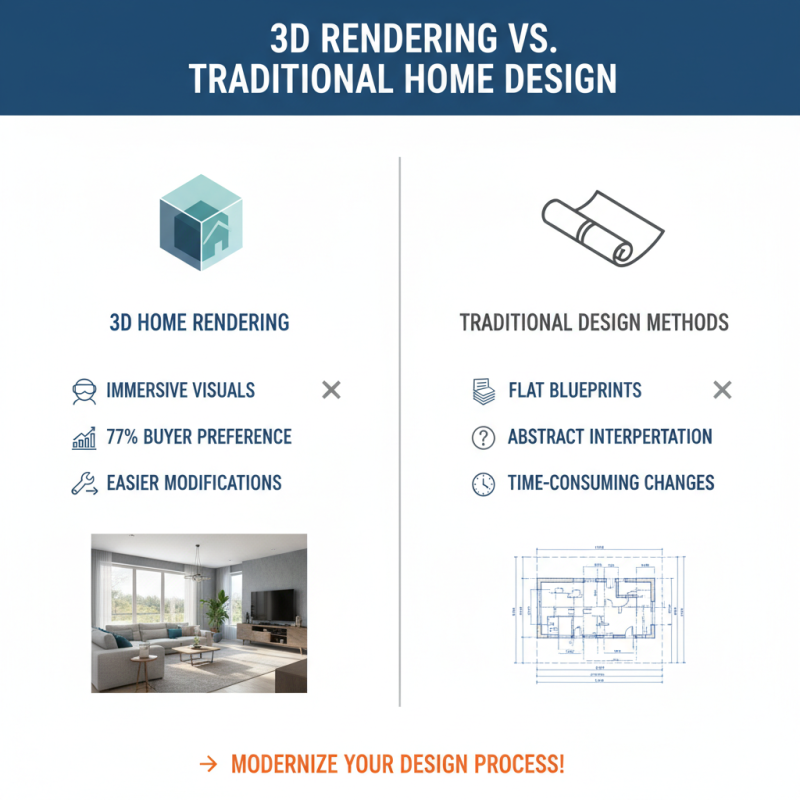
3D home rendering offers unique advantages over traditional design methods. With the rise of digital technologies, many architects and designers are opting for 3D visuals. Research shows that 77% of buyers prefer homes that are showcased in 3D renderings. This method provides a more immersive experience, allowing clients to visualize spaces in a way that flat blueprints cannot achieve.
Traditional design methods often rely on 2D sketches and physical models. These methods can be limiting. While they allow for some depth, they lack the realism that 3D rendering delivers. According to industry surveys, 85% of professionals believe 3D visuals lead to better client communication. However, producing high-quality renderings can be time-consuming and costly. Some firm owners report difficulty in balancing between quick turnarounds and quality results.
Moreover, not all clients understand 3D technology. Some may feel overwhelmed by the digital elements. Yet, the undeniable benefits of accurate visualization often outweigh these concerns. Mistakes can happen in any design phase, but 3D rendering can minimize costly revisions. By correcting issues before physical construction, stakeholders can save significant resources.
Cost-Effectiveness of Using 3D Renderings for Home Projects
When planning a home project, budget considerations often take center stage. Utilizing 3D renderings can significantly impact costs. According to a report from the National Association of Home Builders, projects that incorporate 3D visualizations can see a reduction in costly changes and mistakes by up to 30%. This means fewer budget overruns and more efficient resource allocation.
3D renderings allow for clearer communication between clients and builders. They eliminate misinterpretations that can lead to expensive errors. For instance, visualizing spaces in detail helps in understanding scale and layout, which can drastically reduce redesign expenses. A study from the American Institute of Architects shows that 40% of homeowners prefer visual aids, indicating the effectiveness of 3D models in conveying complex ideas.
However, while 3D rendering appears beneficial, it’s crucial to be aware of its limitations. The initial costs for high-quality renderings may be higher. Depending on the scope, these fees can accumulate. Yet, investing in 3D renderings often results in significant savings down the line. Reflection on actual experiences can guide clients in decision-making, balancing upfront costs against potential long-term benefits.
Cost-Effectiveness of 3D Home Rendering for Home Projects
In this chart, we observe the average costs associated with traditional rendering methods compared to 3D rendering. The data highlights the cost-effectiveness of using 3D renderings, significantly reducing project expenses.
How 3D Rendering Enhances Client Communication and Satisfaction
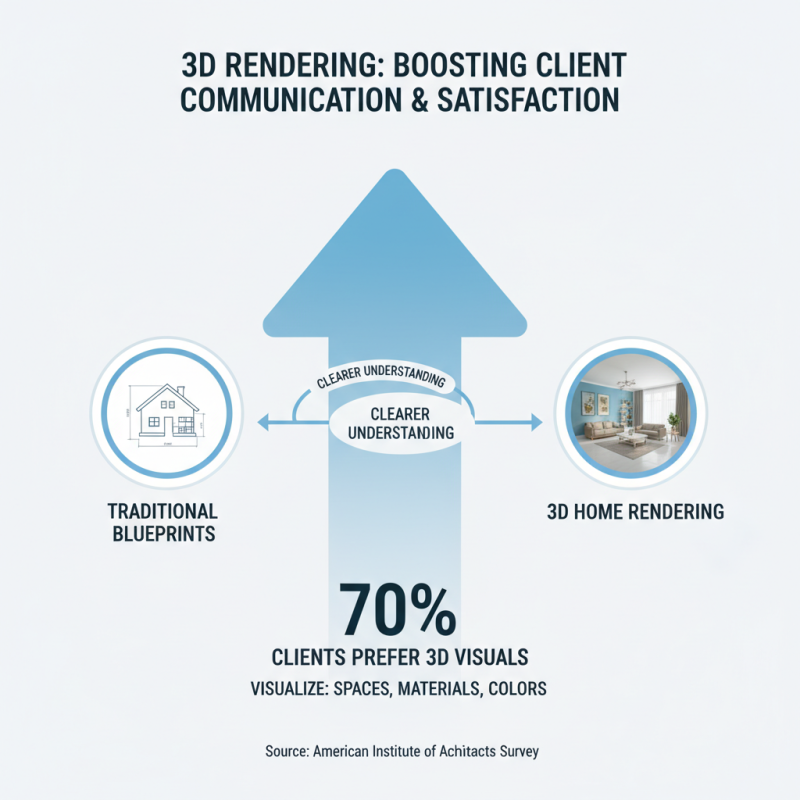
3D home rendering significantly enhances client communication and satisfaction. According to a survey by the American Institute of Architects, 70% of clients prefer 3D models over traditional blueprints. These visual tools create a clearer understanding of the design. Clients can visualize spaces, materials, and colors much better than with flat drawings.
Moreover, 3D rendering allows for real-time feedback. Clients can see changes instantly, fostering an interactive dialogue. This reduces misunderstandings and misalignments between clients and designers. Research shows that projects using 3D renderings have a 30% higher approval rating from clients. However, it's essential to note that not all clients are familiar with virtual tools. Some may find the technology overwhelming. Designers need to ensure clients feel comfortable throughout the process.
Moreover, while 3D rendering is a powerful tool, it’s not infallible. Misinterpretations can arise, especially if the renderings lack adequate detail. Additionally, there’s a learning curve for both clients and designers. Sometimes, the initial expectations may not align perfectly with the final output. Clear communication about what can be achieved is critical to ensuring satisfaction. Balancing technological capabilities with client expectations remains a crucial area for improvement.