


Why Is 3D Model Rendering Important for Product Design?
Team Collaboration: Visual Reviews Reduce Manufacturing Misinterpretation
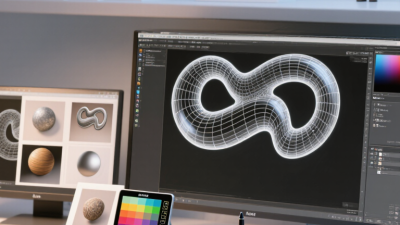
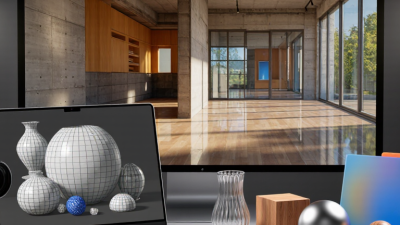
A detailed 3D render gives every team member the same visual reference. During a review, engineers can inspect wall thickness, fastening points, and assembly clearance. A translucent housing can reveal hidden ribs before tooling begins. This detail reduces dependence on vague sketches and technical assumptions.
The Project Management Institute reported that organizations wasted 9.4% of project investment through poor project performance in its 2021 Pulse of the Profession report. Misread design information can contribute to that waste. A 2004 National Institute of Standards and Technology study estimated that inadequate interoperability cost the construction industry $15.8 billion annually. Product development differs, but the communication problem is familiar.
A render is not truth.
It still requires dimensioned drawings, material specifications, and tolerance checks. However, visual reviews expose conflicts earlier. A manufacturing specialist may notice that a screwdriver cannot reach a recessed screw. A quality engineer may question an uneven seam around a curved panel. These comments become clearer when teams rotate the same model, mark exact locations, and compare revised versions.
In practice, rendering works best when designers explain what remains uncertain. Lighting can hide a sharp edge. Smooth surfaces can make thin walls appear stronger than they are. That imperfection deserves attention. Teams should treat the image as a shared inspection tool, not final proof. Clear visual feedback can prevent small misunderstandings from becoming expensive physical changes.