

Inquiry
Form loading...
conatctz48
contact US

Who Offers the Best AI 3D Rendering in China?

Choosing who offers the best AI 3D Rendering in China requires more than comparing polished sample images. A convincing render may look impressive on a website yet fail when a team needs accurate geometry, editable files, or dependable revisions. The right provider depends on the project: an online furniture listing has different needs from an architectural walkthrough or an automotive concept.

This guide compares providers through practical criteria, not hype. We consider image quality, prompt and reference control, model consistency, rendering speed, export options, privacy practices, and support for Chinese and international workflows. Concrete tests matter: Can a chair keep the same proportions across several views? Does a metal surface retain believable reflections under different lighting? Can a designer refine one detail without rebuilding the scene? Those small checks reveal useful differences. That matters.

No single platform will lead every category. Some tools may produce attractive concepts quickly but offer limited control over dimensions. Others may suit experienced designers better, while requiring more setup. But not always. Product claims and feature availability can change, so readers should verify current specifications and test representative files before choosing.

The article will explain how to assess AI 3D rendering services in China, where to look for evidence, and which trade-offs deserve attention. We will distinguish visual appeal from production readiness and note when human review remains essential. A perfectly smooth demo is not proof of a reliable workflow. Results can vary, and that deserves honest attention. The goal is a grounded shortlist, not a universal winner: one that helps studios, brands, and independent creators match a provider to real production needs.

Who Offers the Best AI 3D Rendering in China?

Understanding AI 3D Rendering and Its Role in China

Who Offers the Best AI 3D Rendering in China?

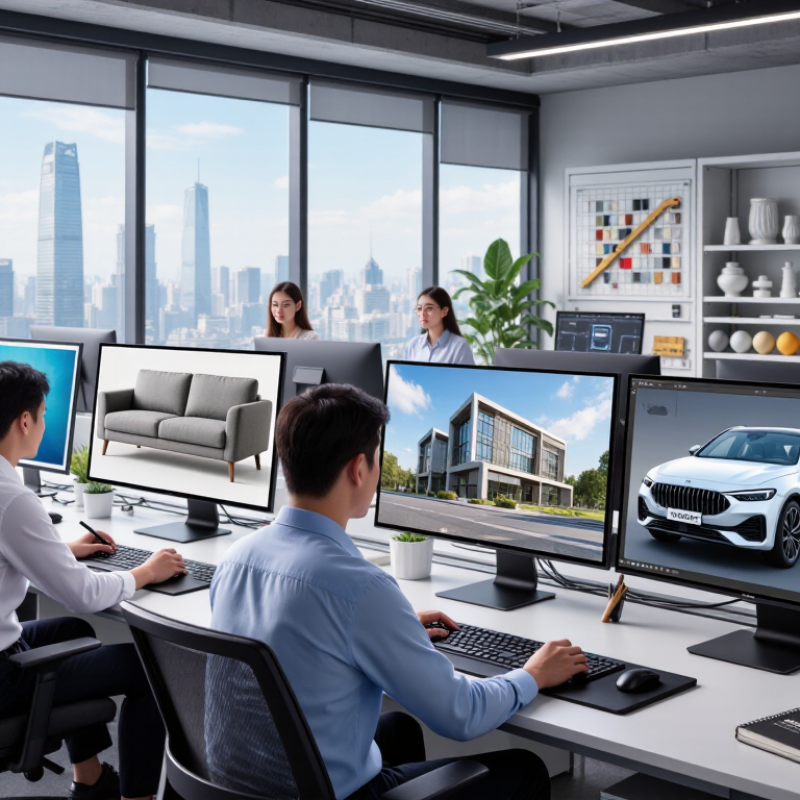
AI 3D rendering combines generative models, computer vision, and traditional graphics engines. It can turn a sketch, product photo, or text prompt into a detailed scene. In China, this technology supports architecture, e-commerce, games, and industrial design. A designer can test five lighting styles before lunch. That changes the workflow.

Market data shows strong investment behind this growth. The Stanford AI Index 2024 reported 15.1 billion dollars in private AI investment in China during 2023. McKinsey estimated that generative AI could create 2.6 to 4.4 trillion dollars in annual global economic value. These figures do not prove rendering quality. They show expanding capacity.

In practice, the best provider should offer accurate materials, stable Chinese-language prompts, secure data handling, and human review. A perfect image is still not guaranteed. Small errors often appear in reflections, hands, measurements, or written labels.

Tips: Test a provider with the same scene, camera angle, and output size. Check render time, revision limits, file compatibility, and ownership terms. Ask for a technical demonstration, not only a beautiful gallery. Autodesk’s 2024 State of Design and Make report highlights growing pressure to adopt AI, but adoption without skilled checking can create expensive mistakes. I would question any service promising fully automatic production. Human judgment remains necessary, especially for engineering details and culturally specific interiors.

Key Criteria for Evaluating AI 3D Rendering Providers

Who Offers the Best AI 3D Rendering in China?

Choosing an AI 3D rendering provider requires more than admiring a polished sample. Start with measurable image quality. Check geometry accuracy, material texture, shadow softness, and fine details such as fabric edges or brushed metal. A 2024 global AI survey reported that 65% of organizations regularly use generative AI. This suggests that workflow integration now matters as much as visual novelty.

Test the provider with identical files and prompts. Measure rendering time, revision accuracy, output resolution, and cost per approved image. Ask whether the system supports common 3D formats and preserves camera settings. Security also deserves attention. Review data retention, access controls, and where project files are processed. Human review remains essential, especially for architectural dimensions and product colors. I still distrust perfect demos. Real projects are messier. Small errors often appear after export.

Tips: Request a blind comparison using five difficult scenes. Include reflective glass, transparent plastic, dark fabric, curved furniture, and mixed lighting. Record failed outputs, not only successful ones. A 2023 industry technology report found that data quality remains a major barrier to reliable AI adoption. Therefore, evaluate how providers handle incomplete models, inconsistent textures, and unclear instructions. A cheap first render may become expensive after repeated corrections. Also check support response times, version tracking, and whether users can reproduce earlier results.

Leading AI 3D Rendering Providers in China

China’s leading AI 3D rendering providers serve different production needs. Specialized studios often combine experienced artists with generative tools. Cloud-based teams focus on speed, scalable workloads, and remote collaboration. Some architectural firms also maintain internal rendering departments for tighter project control.

Reliable providers usually show practical case studies, not only polished demo images. Ask how they handle floor plans, CAD files, lighting references, and material changes. A skilled team can turn a basic apartment layout into a realistic scene with warm wood, brushed metal, and afternoon shadows. They should also explain image ownership, data storage, revision limits, and delivery schedules clearly.

Technical quality still needs human review. AI may distort furniture edges, window proportions, or repeated textures. I have seen attractive renders fail when measurements were ignored. The better providers use model checking, manual refinement, and client feedback at each stage. Their teams understand local architectural styles, Chinese residential layouts, and commercial presentation requirements. However, no workflow is perfect. Some providers promise rapid output before testing complex scenes. That creates avoidable revisions. Clients should compare sample files, request a small trial, and assess communication during pressure. A dependable partner values accuracy over impressive shortcuts.

Comparing Provider Capabilities, Costs, and Workflows

Who Offers the Best AI 3D Rendering in China?

Provider quality depends on more than visual realism. China-based studios differ in model control, Chinese prompt handling, GPU capacity, and CAD or BIM integration. Stanford’s AI Index 2024 reports a 280-fold fall in GPT-3.5-level inference costs between November 2022 and January 2024. That trend supports faster experimentation, but it does not guarantee cheaper 3D production. Complex interiors still need skilled modeling and review.

Workflow matters most. A capable provider should accept CAD files, create controlled material libraries, and return editable scenes rather than flat images. Ask for three test views: a daylight exterior, a reflective kitchen, and a crowded retail space. Measure revision time, geometry errors, and consistency across angles. McKinsey’s 2024 global survey found that 65% of respondents regularly use generative AI in at least one business function. Adoption is broad, yet production discipline remains uneven.

Costs should separate setup, generation, manual correction, and usage rights. A low initial quote may hide expensive revisions. Request a fixed pilot with five images and two revision rounds. It exposes workflow weaknesses quickly. My own concern is simple: benchmark images can look excellent while failing practical design needs. A provider that explains limitations may be more reliable than one promising perfect automation.

Who Offers the Best AI 3D Rendering in China? - Comparing Provider Capabilities, Costs, and Workflows

A practical comparison of provider categories available to teams in China. Cost structures and capabilities vary by provider, plan, workload, and output requirements; confirm current terms before purchasing.

Provider category Typical workflow Core capabilities Cost structure Best suited for Key checks for China-based teams
AI image-to-3D tools Upload a reference image or prompt; generate a 3D asset; inspect and refine the mesh in a 3D application. Rapid concept generation and asset drafts; output quality depends on the input, object type, and available editing controls. Commonly subscription- or credit-based; editing, export limits, and commercial-use terms may differ by plan. Early concepts, simple props, and teams that can clean up generated geometry. Check supported file formats, data handling, access from your network, and rights for commercial use.
Browser-based 3D design and rendering services Build or import a scene in a web interface; adjust materials, lighting, and camera; render and export images. Combines scene editing and rendering in one workflow; collaboration and asset libraries may be included, depending on the service. Usually subscription-based, sometimes with usage limits or paid upgrades for higher capacity and team features. Product visualization, design reviews, and small teams seeking a managed interface. Verify browser performance, upload limits, collaboration permissions, and whether project files can be exported.
Cloud GPU rendering services Prepare a scene in a supported 3D application; upload it or submit a render job; retrieve rendered frames or images. Scales compute beyond local workstations; throughput depends on GPU availability, scene complexity, settings, and queue time. Often billed by compute time, machine type, storage, or a service plan; compare the full job cost, not just the hourly rate. Animation frames, high-resolution scenes, and projects with temporary peak rendering demand. Check supported software versions, transfer time, data location, queue policies, and billing controls.
Managed 3D production services Provide a brief and references; agree on scope and review stages; receive finished assets, scenes, or rendered images. Can combine artist-led modeling, AI-assisted steps, scene setup, revisions, and final delivery; scope depends on the contract. Typically quoted per asset, image, animation, or project; revisions, source files, and usage rights can affect the price. Teams needing a defined deliverable without building an in-house 3D pipeline. Specify deliverables, revision limits, confidentiality, ownership, acceptance criteria, and invoicing terms.
Self-hosted or on-premises rendering workflow Use a local workstation or managed GPU infrastructure; run compatible 3D and AI software; maintain assets and outputs internally. Offers greater control over storage and pipeline configuration; requires hardware, software administration, and technical maintenance. Costs may include hardware or infrastructure, software licenses, electricity, and staff time; total cost depends on utilization. Teams with recurring workloads, technical staff, or strict internal data-handling requirements. Validate software licensing, hardware compatibility, backup policies, security controls, and ongoing maintenance needs.

Comparison note: These are service categories, not a ranking of named providers or independently measured performance results. For a fair shortlist, test the same scene, output resolution, file format, and revision requirements, then compare total cost and delivery time.

Choosing an AI 3D Rendering Provider for Different Needs

Choosing an AI 3D rendering provider in China depends on your project, not only image quality. Architecture teams may need accurate lighting, materials, and room proportions. Product sellers often value fast variations for online catalogs. Industrial companies need precise shapes, technical details, and stable output across many views.

Ask providers for relevant samples and test one real scene. Check whether the system handles Chinese instructions, local building styles, and complex material descriptions. Reliable teams explain their workflow, review process, data protection, and revision limits. Human oversight still matters. AI can create a beautiful chair with incorrect joints. I have seen polished visuals hide small measurement errors.

Tips: Prepare a short test brief with dimensions, reference images, camera angles, and delivery dates. Compare consistency, not just one impressive image. Ask how changes are managed after approval. Confirm file formats, ownership terms, and support response times. A lower price may become expensive when every revision needs manual correction. Speed is useful. Accuracy is better. Also, leave room for practical judgment; the best provider may not produce the most dramatic image, but the clearest and most dependable result.

Name(required)

Message(required)

VISIT US

GuangZhou

Room 2301, building A, poly zhongyu plaza, no. 626 tianhe north road, guangzhou, China

Phone/WhatsApp

+86 13392497798

Email

lights@chinarendering.com