

Why Use 3D Render for Product Sourcing?
Why Use 3d Render for Product Sourcing? The answer begins with a practical problem: suppliers often show limited samples, unclear finishes, and inconsistent product photographs. A detailed 3d Render can display dimensions, materials, stitching, colors, and packaging before physical production begins. Buyers can inspect a virtual chair leg, bottle cap, or fabric texture from several angles. That visibility supports clearer supplier communication and faster comparison.
Industry data supports this shift. Shopify reported that merchants using 3D or augmented-reality content achieved conversion increases of up to 94%. Salsify’s 2023 Consumer Research Report also found that 54% of consumers had returned products because they did not match their online descriptions. These findings focus on retail, but they reveal an important sourcing lesson. Better visual accuracy can reduce expectation gaps before orders become expensive.
Sebastien Deguy, Adobe’s vice president of 3D and Immersive, described the wider change simply: “3D is the new photography.” His statement reflects how visual assets now influence product decisions, not only marketing. A 3d Render can help procurement teams test colorways, revise proportions, and request quotes from suppliers without shipping multiple prototypes. It may also expose problems early, such as a thin wall, awkward seam, or poorly placed logo.
Still, rendering is not a magic button. A beautiful file cannot guarantee factory quality, material strength, or accurate tolerances. Buyers should compare renders with technical drawings, physical samples, and supplier capabilities. The workflow remains imperfect. That imperfection demands careful review, documented specifications, and honest communication.
What Is 3D Rendering in Product Sourcing?
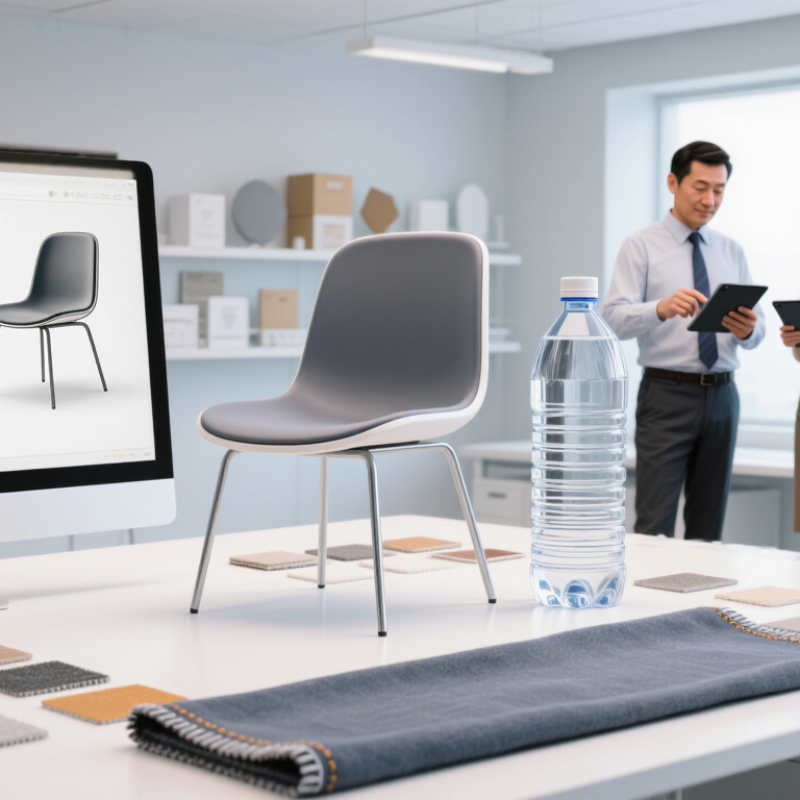
3D rendering in product sourcing is the process of creating a digital, three-dimensional image of a product before manufacturing begins. It can show the product’s shape, dimensions, materials, colors, and surface details. A sourcing team may use the render to review a concept with suppliers and compare design options more clearly.
For example, a render can display a storage box with a matte lid, rounded corners, and a measured hinge position. Suppliers can inspect these details before preparing a prototype or quotation. This reduces confusion caused by rough sketches or unclear descriptions. It also helps buyers identify possible problems, such as thin walls, difficult assembly, or unsuitable material choices. However, a render is not a physical sample. It cannot fully prove weight, texture, durability, or production performance. That limitation matters.
A render is not a physical sample and cannot fully prove weight, texture, durability, or production performance.
In practical sourcing work, buyers should connect the render with technical drawings, material requirements, and a written revision record. I have found that small details often create large misunderstandings. A shadow in the image may look like a groove, while a glossy finish may hide an uneven surface. The design may need revision.
Tips: Ask the supplier to confirm dimensions, materials, tolerances, and finishing methods. Request close-up views of joints and functional parts. Compare the final render with a physical sample before approving mass production. Keep every change dated and documented.
How 3D Renders Improve Product Concept Communication
Why Use 3D Render for Product Sourcing?
A 3D render turns a rough product idea into something suppliers can inspect. It shows proportions, surface finishes, seams, buttons, and packaging space before sampling begins. A buyer can mark the exact corner that feels too sharp. A factory can question a wall thickness that looks attractive but may be difficult to mold. This shared visual reference reduces guesswork between teams using different technical backgrounds.
The Project Management Institute’s 2024 Pulse of the Profession reports that poor project performance wastes nearly 10% of investment. Clearer concept communication can help prevent avoidable revisions, although renders cannot replace engineering validation. McKinsey Global Institute’s 2016 digital construction report found that wider digital coordination could create 14–15% productivity gains. Product sourcing is different, but the lesson remains relevant: connected information improves decisions.
Make the render honest.
A polished image can hide weight, texture, tolerances, or assembly risks. I have seen attractive concepts fail when the handle felt uncomfortable or the chosen finish was unavailable. Good sourcing teams use renders with dimensions, material notes, and reference views. They also request supplier feedback early. The image should invite questions, not end them. A second render showing the underside, internal structure, or folded packaging may communicate more than another beauty angle. That small imperfection often reveals the most important production issue.
Why Use 3D Render for Product Sourcing? - How 3D Renders Improve Product Concept Communication
Comparative sourcing workflow benchmark for early-stage product development
| Sourcing Dimension | 2D Drawings and Text Only | 3D Render-Supported Brief | Indicative Improvement | Practical Sourcing Benefit |
|---|---|---|---|---|
| Initial concept comprehension | Approx. 60%–70% of visual details understood during the first supplier review | Approx. 85%–95% of visible form, color, material, and finish details understood | +25 to +35 percentage points | Suppliers can evaluate the intended product appearance before physical sampling |
| Average clarification rounds | 4–6 rounds for shape, color, surface, and component questions | 2–3 rounds when the render includes multiple views and material callouts | Approximately 40%–50% fewer rounds | Less email back-and-forth and faster supplier response cycles |
| Design revision cycles before sampling | 3–5 revision cycles are commonly required to resolve visual ambiguity | 1–3 revision cycles when key visual decisions are approved digitally first | Approximately 30%–50% fewer cycles | Reduces avoidable sample changes before tooling or production preparation |
| Pre-sample decision time | Typically 7–14 working days for cross-functional review and clarification | Typically 3–7 working days with a shared visual reference | Approximately 40%–60% faster | Enables earlier comparison of suppliers, materials, and target cost options |
| Material and finish alignment | Color and surface expectations may remain subjective or incomplete | Visible material, gloss, texture, color, and finish references can be reviewed together | Higher visual consistency | Improves the quality of supplier quotations and reduces finish-related surprises |
| Supplier quotation completeness | Quotations may exclude unclear components, finishes, packaging, or assembly steps | More visual information is available for component, finish, and assembly assumptions | Fewer quotation assumptions | Makes supplier-to-supplier cost comparisons more meaningful |
| Remote stakeholder alignment | Different teams may interpret technical descriptions differently | A shared 3D visual reference supports design, sourcing, engineering, and marketing reviews | Higher cross-team alignment | Creates a consistent decision reference across locations and time zones |
| Physical sample risk | Higher risk of receiving a sample that matches the drawing but not the intended appearance | Lower risk because visual expectations are reviewed before sample production | Lower rework exposure | Protects sampling time, development budget, and launch schedules |
How 3D Renders Support Design Review and Customization
In product sourcing, 3D renders turn an early idea into a shared visual reference. A sourcing team can inspect proportions, seams, textures, and component placement before sampling. This makes design review more precise than discussing a sketch or short description. Reviewers can rotate the product, zoom into a corner, and compare several finish options. Small details become visible. A two-millimeter edge change may affect grip, packaging, or perceived quality.
Renders are especially useful when buyers request customization. Teams can test different colors, dimensions, handle shapes, or logo positions without building every version. A matte surface can be compared with a polished one. A control panel can move ten millimeters before tooling begins.
Reviewers can mark comments directly on each view, reducing vague email exchanges. A clear file naming system and revision log also improve traceability. This works best when dimensions and material notes accompany the images.
A render is not proof of final production. Lighting can make plastic look richer, while digital fabric rarely shows its true hand feel. I once approved a convincing visual that hid insufficient clearance around a hinged part. That mistake required another review. Physical samples, tolerance checks, and supplier feedback remain necessary. The strongest workflow combines realistic renders with measurable specifications, agreed approval points, and honest discussion of manufacturing limits. Appearance is only part of performance.
How 3D Renders Reduce Sourcing Costs and Production Risks
3D renders turn a sourcing idea into a visible, testable product before production begins. Buyers can inspect proportions, stitching, surface texture, and hardware placement on one screen. A zipper that looks too bulky becomes obvious early. A sleeve opening can be measured before any sample is shipped. McKinsey’s 2021 digital-twin analysis found that digital twins can reduce time to market by up to 50% and improve product quality by up to 25%. A render is not a digital twin. However, it applies the same early-validation principle.
The cost savings appear across several sourcing stages. Teams can compare materials, colors, dimensions, and supplier revisions without ordering every physical sample. Fewer samples can reduce courier fees, packaging waste, and approval delays. Production partners also receive clearer visual instructions, which lowers the risk of incorrect tooling or repeated prototypes. The UNEP Global Resources Outlook 2024 reports that global resource extraction could rise by 60% by 2060. Reducing unnecessary sample production therefore supports both cost control and resource efficiency.
Yet renders can still mislead. Lighting may hide weak fabric recovery, rough edges, or inaccurate color. Digital files also depend on correct measurements and supplier feedback. Experienced teams should request material swatches, technical drawings, and one physical sample before mass production. That extra check costs time. It may prevent a larger mistake.
How to Integrate 3D Renders into the Sourcing Process
A reliable sourcing process can begin with a clear 3D render. It gives suppliers a shared visual reference before physical samples exist. I usually attach the render to the product brief, drawings, and material requirements. The image should show dimensions, surface finishes, colors, joints, and functional details. Small annotations prevent expensive misunderstandings.
Keep the workflow practical. Send the render with a structured request for quotation. Ask suppliers to confirm tooling needs, material availability, production limits, and estimated costs. Request comments directly against numbered areas of the image. This makes revisions easier to track. I also compare each quotation with the same render version. Otherwise, suppliers may price different product interpretations.
The render should not replace engineering review or sample testing. It can look perfect while hiding weak joints, awkward assembly, or an unrealistic finish. That happened in one development review. The handle looked balanced on screen but felt uncomfortable in the hand. A revised render helped, but a physical sample revealed the real issue.
Keep version numbers visible. Record every approved change. Share updated files promptly. It is tempting to add attractive details late in sourcing. That choice can affect molds, packaging, lead times, and quality checks.
A simple render is often more useful than a beautiful one. Suppliers need accurate information, not decoration.
Related Posts
-
7 Tips for Better 3D Model Rendering?
-

Why Is 3D Model Rendering Important for Product Design?
-

2026 Top 3D Render Types for Global Buyers
-

Why Is 3D Model Rendering Important for Global Buyers?
-

China Top 10 3D Rendering Companies for Global Buyers?
-

Best 3D Rendering Companies in China for Global Buyers