


Inquiry
Form loading...
conatctz48
contact US

Top 10 3D Architectural Rendering Companies for Buyers

Choosing a 3D visualization partner can shape how buyers evaluate a project long before construction begins. A convincing image should do more than look polished. It should communicate scale, materials, lighting, and the way people may use a space. This guide introduces ten 3D Architectural Rendering companies for buyers comparing providers, budgets, and production styles.

The companies are considered through practical factors: portfolio quality, service range, communication, delivery process, and experience with relevant project types. Look closely at sample work. A sunlit apartment interior, for example, reveals different strengths than a dusk exterior with glass façades and landscaped paths. Ask who handles revisions, what files are included, and whether the quoted timeline accounts for feedback. Small details matter.

No shortlist can identify one perfect studio for every buyer. Rankings also cannot replace a direct review of recent projects, references, and proposals. Some providers may excel at cinematic animation, while others offer clearer documentation or faster still-image production. There is a trade-off. The best fit depends on your design stage, audience, and available budget. Use these profiles as a starting point, then compare actual deliverables and ask specific questions before making a decision.
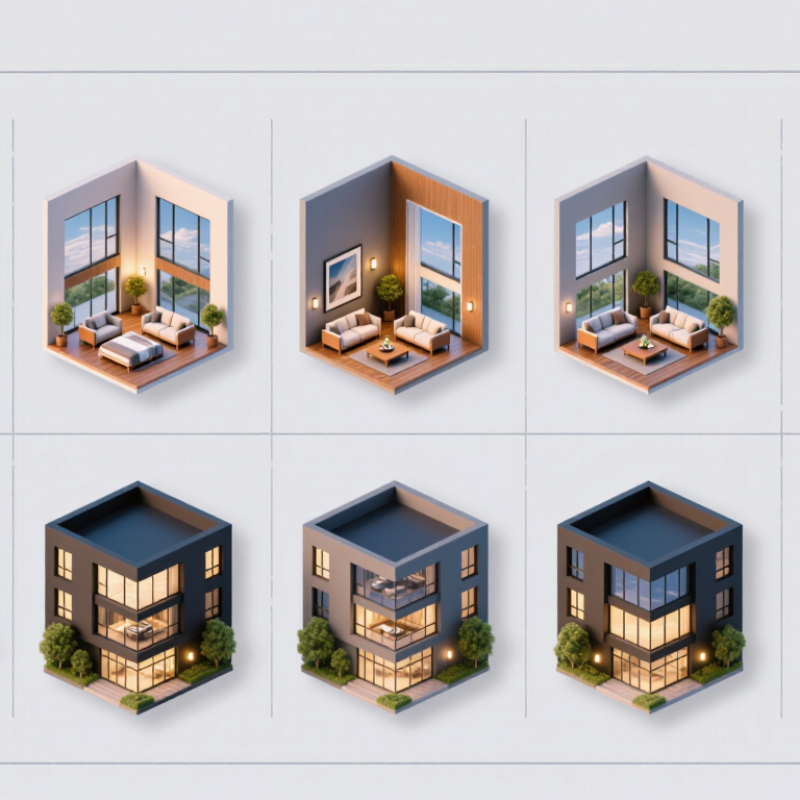
Top 10 3D Architectural Rendering Companies for Buyers

What 3D Architectural Rendering Companies Provide

A 3D architectural rendering company turns drawings, models, and project notes into images that help buyers understand a proposed space. Typical services include exterior and interior renderings, aerial views, floor-plan visuals, and short animations. Teams may build or refine a digital model, apply materials, set lighting, and place furniture or landscaping. A clear brief matters. Share current plans, material references, camera preferences, and the intended audience before production begins.

The process often includes draft views, review rounds, and final files sized for presentations, websites, or print. Ask what each revision covers and whether source files are included. These details affect both schedule and cost. For example, changing a window layout after detailed lighting work may require more than a quick edit. A realistic image is useful, but it is still an interpretation; check dimensions and design decisions against the approved drawings. Small discrepancies happen. Review carefully.

Tips: Request a low-detail preview before final rendering. Mark specific changes, such as “warm the oak floor” or “lower the camera,” rather than saying “make it better.” Confirm image format, resolution, and delivery date in writing.

How Buyers Can Evaluate Rendering Providers

When comparing 3D architectural rendering companies, look beyond polished portfolio images. Ask how each team handles revisions, missing project information, and tight deadlines. A useful test is to share one floor plan and request a sample view with a clear scope. Check whether window proportions, material textures, and lighting match your brief—not just whether the image looks impressive.

Review the production process. Who confirms dimensions and finishes? How many revision rounds are included, and what counts as a new request? Request a delivery schedule with checkpoints, such as a draft camera view before final rendering. This can catch a misleading perspective early. Also ask how files are shared and who may access them. Clear answers matter. Vague promises are a warning sign.

Experience should fit your project type. A team skilled at residential interiors may not be the best match for a large mixed-use exterior. Ask for comparable examples and practical details about their role, the software workflow, and quality checks. Compare proposals line by line, including image resolution, source files, and extra-view fees. The cheapest quote may omit useful revisions; the most expensive one may not explain its value. I would still leave room for judgment: a checklist cannot fully predict how well a team communicates once the project changes.

Top 10 3D Architectural Rendering Companies for Buyers — How Buyers Can Evaluate Rendering Providers

Use this practical scorecard to compare rendering providers consistently. It evaluates selection criteria rather than ranking or naming individual companies.

Buyer Evaluation Scorecard for Architectural Rendering Providers
No. Evaluation criterion Suggested weight What to assess Evidence to request Buyer check
1 Relevant portfolio experience 15 points Look for completed work with a similar building type, design style, audience, and level of detail. Comparable project samples, project descriptions, and confirmation of the provider’s role in each sample. Compare like with like; a portfolio image alone does not establish the provider’s scope of work.
2 Visual quality and consistency 15 points Assess lighting, materials, composition, landscaping, realism, and consistency across images. Several images from the same project, including different views or lighting conditions. Check full-resolution images and review details such as edges, reflections, vegetation, and people.
3 Design and technical accuracy 12 points Confirm that geometry, dimensions, finishes, site conditions, and design revisions can be represented accurately. A sample review process, required input-file list, and a written method for recording design changes. Provide current drawings and clearly identify which source documents take precedence if they differ.
4 Scope and deliverables 10 points Check the number and type of views, image dimensions, file formats, included modeling, and any animation or panoramic outputs. A written scope listing deliverables, assumptions, exclusions, and any extra-cost items. Specify intended use, such as presentations, print, web, planning submissions, or sales materials.
5 Schedule and turnaround planning 10 points Evaluate whether milestones, review windows, dependencies, and final delivery dates are clearly defined. A project schedule showing draft stages, client feedback deadlines, and delivery milestones. Allow time for client approvals and design changes; turnaround depends on project complexity and input readiness.
6 Revision and approval process 8 points Understand how many review rounds are included and how corrections differ from changes to approved design or scope. Written revision terms, feedback format, and the process for approving drafts. Ask how late-stage changes affect fees and schedule before work begins.
7 Pricing transparency 8 points Compare what is included in the quote, payment milestones, taxes, and potential charges for additional work. An itemized proposal with assumptions, exclusions, and a change-order process. Compare proposals using the same views, detail level, output specifications, and revision assumptions.
8 Communication and project management 7 points Assess response clarity, named project contacts, feedback coordination, and escalation procedures. A proposed communication plan, meeting cadence, and method for consolidating client comments. Agree who can approve work and how conflicting feedback from multiple stakeholders will be resolved.
9 File handling and confidentiality 5 points Review how source files and unpublished project information are transferred, stored, and retained. File-transfer procedures, access controls, retention terms, and a confidentiality agreement where needed. Share only the files required for the work and confirm ownership and permitted use of final deliverables.
10 References and delivery reliability 10 points Check whether previous clients can speak to communication, accuracy, schedule management, and final delivery. Relevant client references or case studies with project scope and outcomes described. Ask references about issues encountered and how they were handled, not only whether they liked the images.
Total suggested weighting 100 points Score each provider against the same criteria and document the evidence behind each score.

Scoring tip: Rate each criterion from 1 to 5, multiply the rating by its weight, and divide by 5. Treat the weights as a starting point and adjust them to match your project priorities.

Key Criteria for Comparing the Top 10 Companies

Compare portfolios against your actual project, not polished hero images. Check whether interiors, exteriors, materials, and lighting match your brief. A convincing test is a close view of a familiar detail: timber grain, window reflections, or a stair junction. Ask who creates the images, how many revision rounds are included, and whether fees cover model changes. A 2020 construction-industry report, Harnessing the Data Advantage in Construction, estimated that 96% of captured project data goes unused. Clear file naming, version control, and documented feedback can help prevent design decisions from disappearing in scattered email threads.

Evaluate technical fit as carefully as visual quality. Confirm accepted model formats, image dimensions, animation options, and delivery dates before signing. Request a sample workflow with milestones, named reviewers, and approval points. Ask how the team handles late design changes; vague answers may signal extra costs or schedule pressure. Portfolio consistency matters, but it does not prove a team can meet your deadline. That part is easy to overlook.

Tips: Send every bidder the same brief, reference images, camera views, and deadline. Compare itemized quotes, not just totals. Ask for one revision example, including the original comment and final image. Then check whether the change was interpreted accurately. A small test can reveal more than a long sales call.

Top 10 3D Architectural Rendering Companies: Buyer Comparison Criteria

Suggested scorecard weighting for comparing providers. Each criterion is weighted equally; these are evaluation guidelines, not company-specific ratings or market research.

Use these criteria to assess portfolio relevance, image quality, technical accuracy, customization, delivery timing, communication, pricing clarity, revision terms, deliverables, and confidentiality.

Top 10 3D Architectural Rendering Companies for Buyers

Top 10 3D Architectural Rendering Companies for Buyers

Choosing among the top 10 3D architectural rendering companies means comparing more than attractive images. Ask each team how it handles model accuracy, lighting, material changes, delivery dates, and revision limits. A polished image can still misrepresent a balcony depth or window finish. Details matter.

The 2023 Global Status Report for Buildings and Construction, from UNEP and the Global Alliance for Buildings and Construction, estimates that buildings and construction produced 37% of global energy- and process-related carbon dioxide emissions in 2022. This makes clear communication about materials and daylight valuable. However, a rendering is not proof of energy performance. Buyers should request source files or documented assumptions when technical accuracy matters. The best choice may not be the lowest quote. It may be the team that spots inconsistencies early.

Tips: Send every candidate the same sample brief. Compare a close-up, an exterior view, revision terms, and the proposed schedule. Check carefully. One awkward question can reveal more than a glossy portfolio.

How to Match a Provider to Your Project Needs

A rendering provider should fit the decisions your project needs to support, not just produce attractive images. For early design reviews, ask for quick material and lighting revisions; for sales presentations, prioritize polished interiors, landscaping, and consistent views. The 2017 Reinventing Construction report estimated that construction productivity grew about 1% annually over two decades, compared with 2.8% for the wider economy. That gap makes clear communication valuable, but a beautiful image alone will not fix a weak review process.

Check how the team handles source files, revision limits, and deadlines. Request a sample view using your own plans, then compare its scale, window placement, and material detail with the drawings. The 2019 National BIM Report found that 69% of respondents were using BIM, a reminder that providers may need to work with established digital models. Ask whether they can preserve model geometry or flag missing information before rendering begins. Small test first. Be honest about what matters most: a low bid can become expensive when late revisions are excluded. I would not choose on portfolio quality alone; it is easy to overlook how much time a team needs to understand your brief.

Name(required)

Message(required)

VISIT US

GuangZhou

Room 2301, building A, poly zhongyu plaza, no. 626 tianhe north road, guangzhou, China

Phone/WhatsApp

+86 13392497798

Email

lights@chinarendering.com